

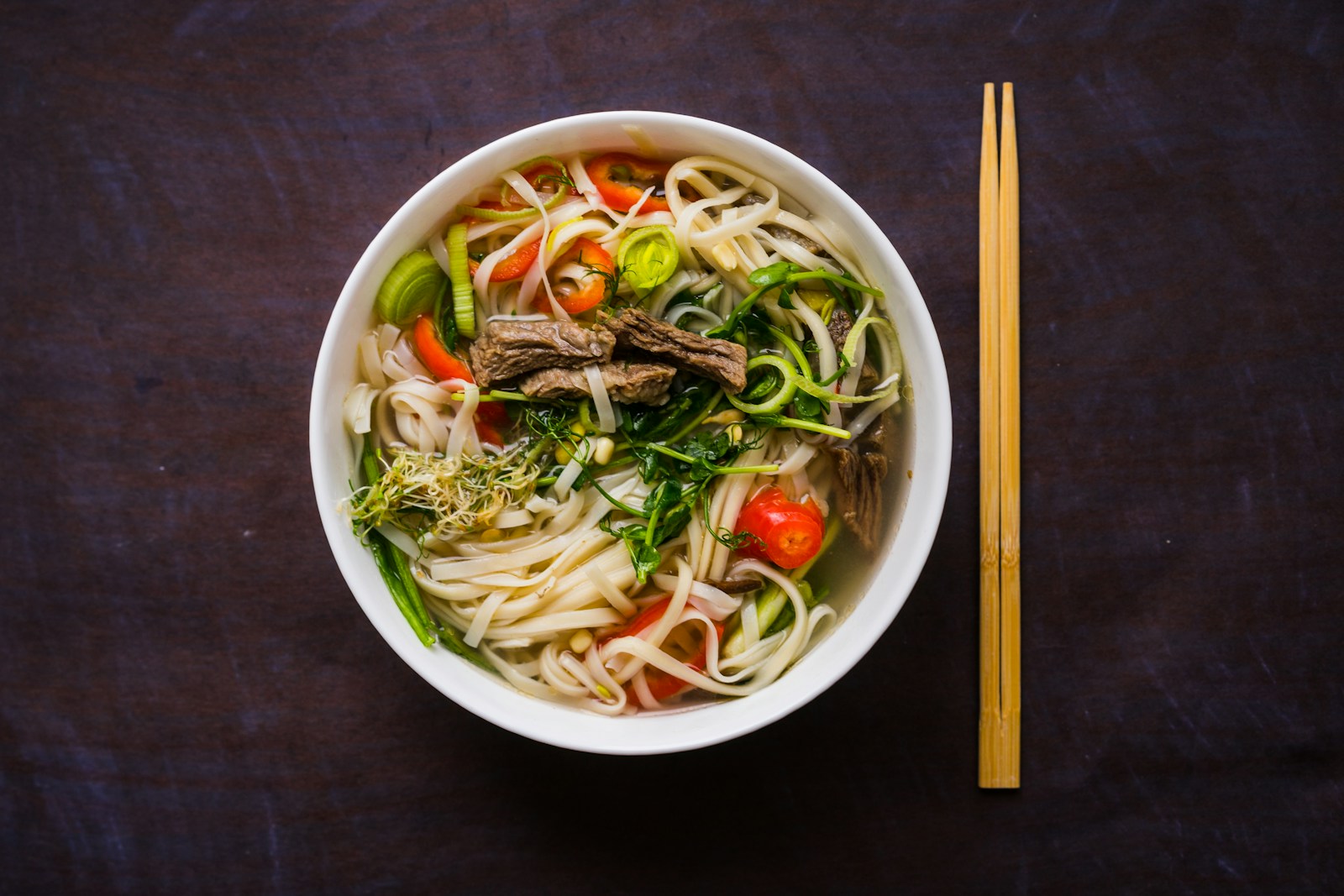
Local breakfast · Dương Đông, 15 km north
Bún quậy Phú Quốc: what it is and where to eat it
If you’ve eaten bún quậy once, you’ll probably want it again the next morning. It’s Phú Quốc’s most distinctive local breakfast — a pale rice noodle soup with fresh seafood and a dipping broth you stir yourself at the table. The name literally means “stirred noodles,” and the ritual of mixing in fish sauce, chilli, and lime is half the experience. It’s sold almost nowhere else in Vietnam, and on the island it’s eaten almost exclusively before ten in the morning.
We send most of our guests to Dương Đông for it. From Luna, that’s about fifteen minutes north by scooter along the coast road, or twenty in a Grab. Worth every minute.
What bún quậy actually is
The base is a clear, lightly sweet broth made from fish bones and dried shrimp. Into it go thin, soft rice noodles — slightly stickier than regular bún — topped with a combination of fresh prawns, fish cake, squid, and sometimes crab paste. On the side you get a small bowl of hot dipping sauce: the broth itself, intensified and seasoned, which you adjust with a squeeze of lime, fresh chilli slices, and fish sauce from the condiment tray.
The “stirring” part: some spots bring the noodles and hot broth separately, and you pour the broth over yourself to finish cooking the seafood. The pacing is intentionally slow — this is a sit-and-talk breakfast, not a grab-and-go one.
A standard bowl runs between 35,000 and 60,000 VND depending on the toppings. Order the đặc biệt (special) for the full seafood spread.
Where to eat it in Dương Đông
There’s a handful of spots that have been at this for years. A few we’ve sent guests to without anyone coming back disappointed:
Kiến Xây on Đường 30/4 is the oldest and most cited — over twenty years, consistently packed with locals before eight. The fish cake is made fresh on site. It’s never quiet.
Thanh Hùng near the town centre has a slightly lighter broth, less aggressive on the MSG, and a bit more space to sit. Good if you want a calmer table.
Bún quậy Cây Xanh is the most local-feeling of the bunch — small, no frills, rotating regulars. Noodles made from locally milled rice, noticeably softer than at the bigger spots.
None of these are on a tourist strip. Ask your Grab driver to drop you at the one you want rather than searching on the map — they’ll know exactly where to stop.
The right time to go
Bún quậy is a breakfast dish, full stop. The places open around six and most are sold out or closed by ten. If you arrive at eleven expecting to find it, you won’t. Plan an early morning — leave Luna around seven, eat by seven-thirty, and you have the whole day ahead with a real local meal behind you.
The walk through Dương Đông market before or after is worthwhile. The dried seafood stalls, the sim berry wine displays, and the fish sauce producers are all within a few minutes on foot.
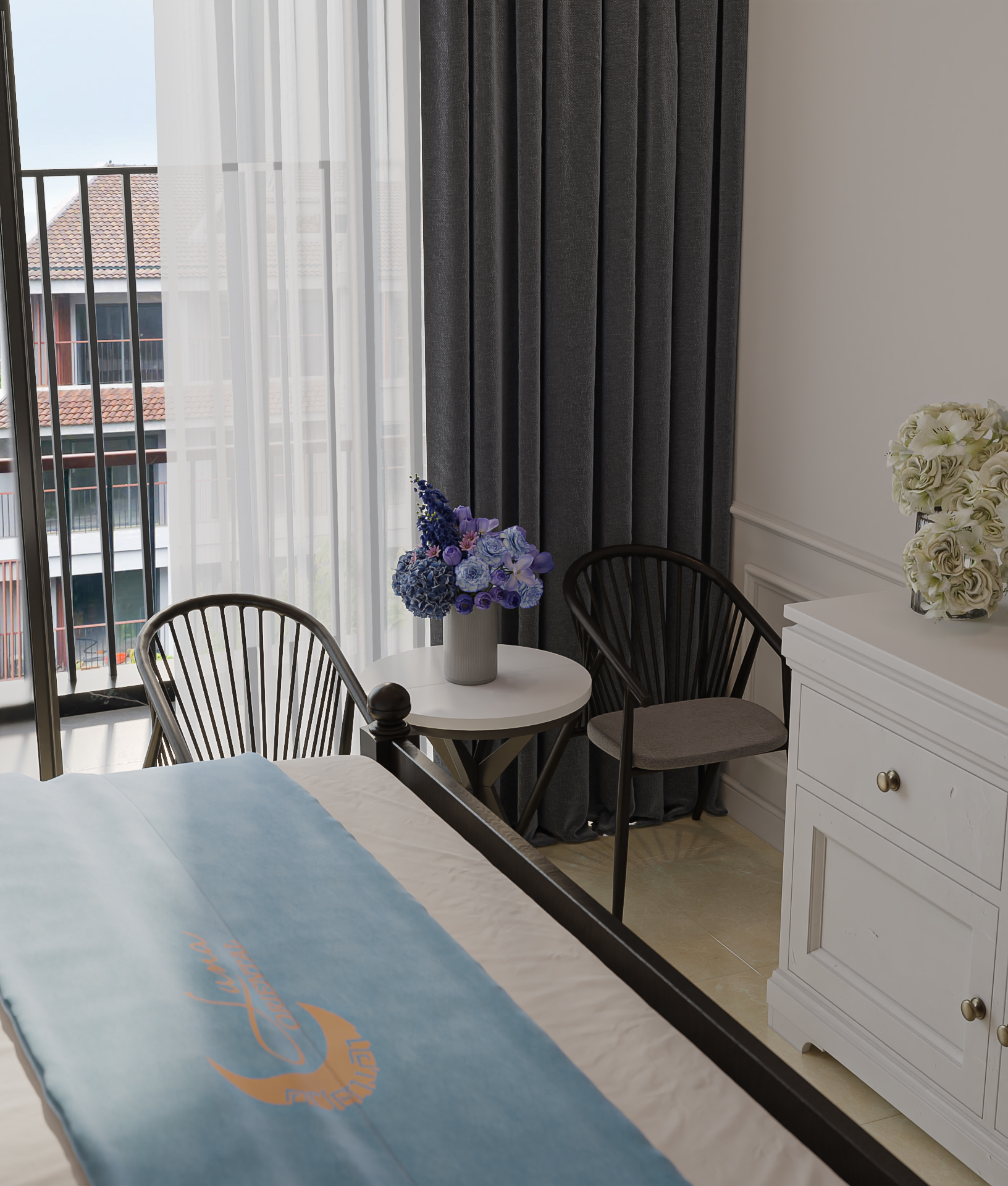
Getting there from Bãi Trường
Luna Oriental sits inside Sonasea at SS27, Bãi Trường — see our location. Dương Đông is about 15 km north.
- Scooter: the fastest and most enjoyable option. We lend scooters to guests staying three nights or more — ask at check-in.
- Grab: reliable along the coast road, around 80,000–120,000 VND one way. Book the return before you sit down to eat, or it may take a few minutes to find a driver near the market.
- Hotel car: if you’d rather not deal with traffic, message us the day before — we can usually arrange a car for the same cost as a taxi.
Booking direct with us means you can ask these questions before you arrive and have a plan ready. It also saves the 15–20% the OTAs charge on top — book direct here.
Photo: Kirill Tonkikh on Unsplash
Frequently asked questions
Is bún quậy only available in Phú Quốc?
Mostly yes. It's a Phú Quốc original and you'll find it almost nowhere else in Vietnam. A few spots in Rạch Giá on the mainland serve a version of it, but the island is where it was invented and where it's best.
Can I eat it if I don't eat seafood?
It's a seafood dish at its core — the broth is fish-based and the toppings are all from the sea. There's no vegetarian version at the places we know. If you have a shellfish allergy, let the kitchen know when you order.
Is it spicy?
Not by default. The chilli is on the side and you add as much or as little as you want. The base broth and noodles are mild.