

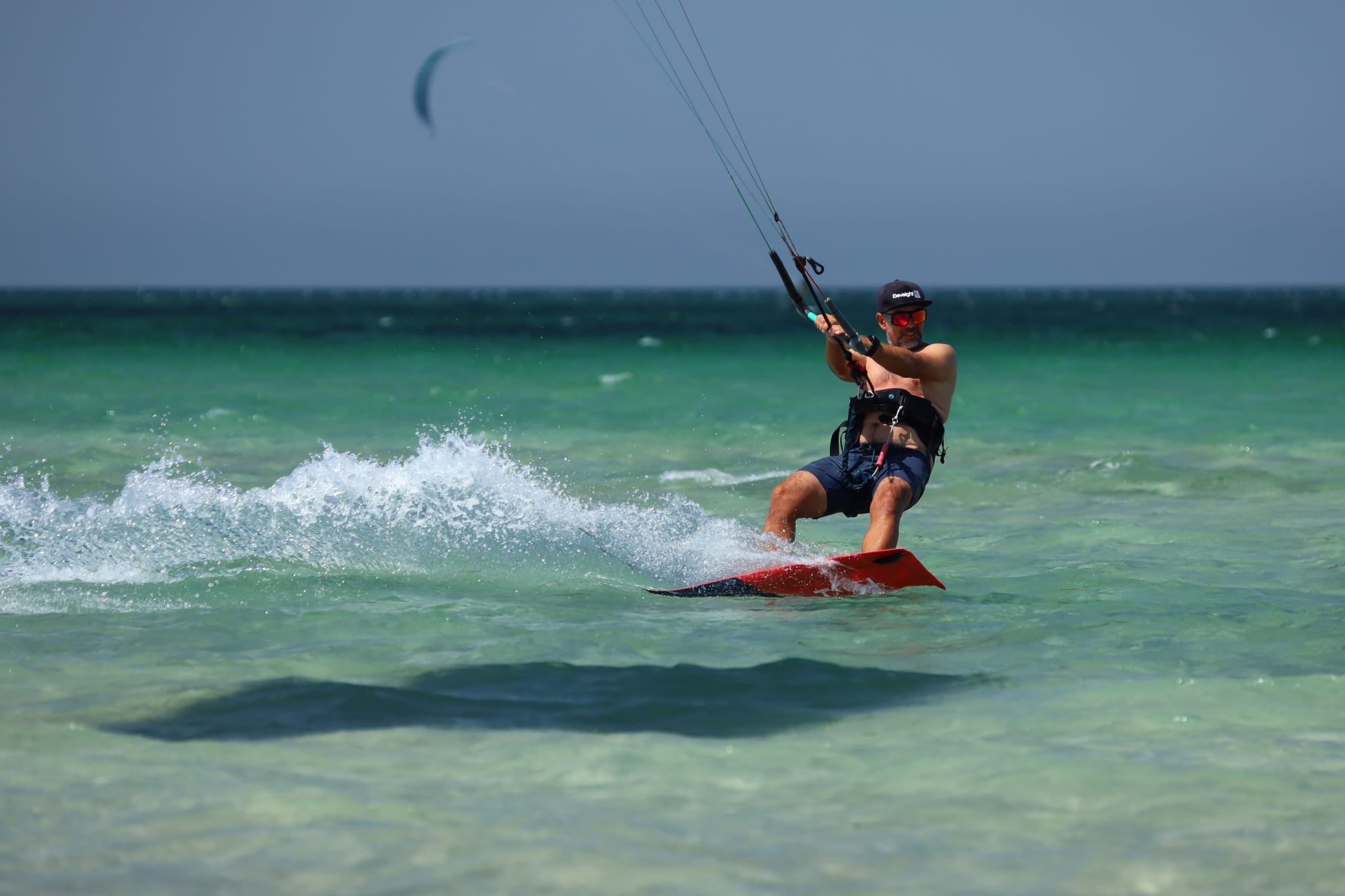
Bãi Dài · dry season Nov–Apr · steady wind
Kitesurfing Phú Quốc: where, when, and what it costs
Most guests at Luna hear the afternoon wind before they think much of it — it picks up on Bãi Trường most days in the dry season, rattling the beach umbrellas around four o’clock. A few kilometres northwest, at Bãi Dài, that same wind is the entire point. From November to April, it’s steady enough, and the water flat enough, to kitesurf.
Kitesurfing Phú Quốc is not the island’s biggest activity — nowhere near the scale of the cable car or the snorkel boats — and that’s worth saying upfront. It’s a real, rideable wind sport here, but a small one, run by a handful of independent instructors rather than a big operator with a fleet of gear. If that sounds appealing rather than off-putting, here’s what to actually expect.
Where the wind is: Bãi Dài, not Bãi Trường
Bãi Trường, where Luna sits, gets breeze most dry-season afternoons — enough to notice, not reliably enough to build a kite session around. The real spot is Bãi Dài, the long, largely undeveloped beach on the island’s northwest coast. It faces open water with nothing blocking the fetch, so the wind arrives clean and cross-shore — exactly the setup kiters look for. The beach itself is wide and mostly empty outside a few access points, which means plenty of room to launch and land without dodging sunbathers.
Locals and instructors describe Bãi Dài’s wind as milder than some of Vietnam’s more famous kite coasts further north — commonly cited around 10 to 18 knots, sometimes touching higher. That’s a genuine advantage if you’re still learning: enough power to get up and ride, not so much that a mistake turns into a fight with the kite.
When to go
The window is November to April, driven by the northeast monsoon — the same dry season that makes this the best stretch of the year for most of Phú Quốc’s outdoor activities. Within that window, December through March is the most dependable stretch for wind, with speeds commonly running somewhere in the 12 to 22 knot range on the open coast. Go earlier or later in the season and you may still get good days, just with less certainty.
From May to October, the wind mostly disappears from this coast along with the dry weather. It’s not the season to plan a kite trip around — better to read our rainy season guide and pick a different set of activities for a wet-season stay.
Gear, lessons, and an honest note on cost
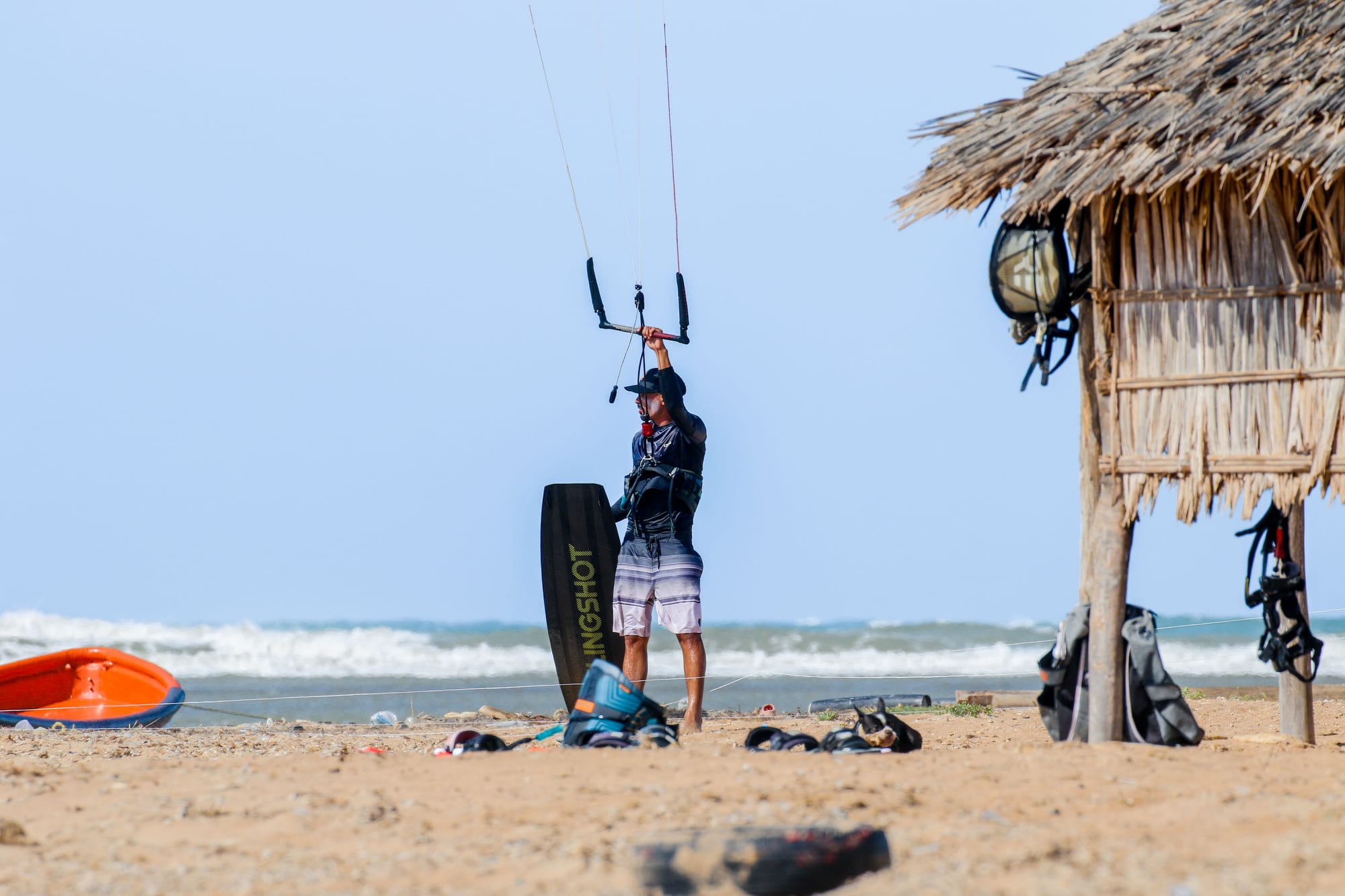
Rigging up before a session — most of Bãi Dài’s operators run out of simple beach setups like this, not shopfronts.
Here’s the part worth being straightforward about: kitesurfing infrastructure on Phú Quốc is still small. A few independent instructors and small rental operations work out of Bãi Dài, not a row of shopfronts. Gear can run short in peak months, particularly around the busiest weeks of the dry season, so this is one activity worth arranging a few days ahead rather than turning up and hoping.
Rough pricing, based on what operators on the island currently charge: full gear rental runs somewhere around 800,000–1,200,000 ₫ per hour, a lesson with an instructor is roughly 1,000,000–1,500,000 ₫ per hour, and a beginner package of two to three hours — the sensible way to start — typically begins from about 2,000,000 ₫. Confirm the current rate and gear availability directly with whichever instructor you book; prices and equipment on offer shift season to season.
If you’ve never kited before, spend the money on a lesson rather than a solo gear rental. The learning curve involves managing a kite on land before you’re anywhere near a board, and a good instructor gets you through that part safely in a way that trying to figure it out alone doesn’t.
Getting to Bãi Dài from Luna
It’s about an hour by scooter or car from Bãi Trường — north through Dương Đông, then northwest on the island road. The drive itself is one of the nicer ones on the island, with a stretch through the edge of Phú Quốc National Park where the forest closes in on both sides. Message the front desk the evening before if you’d like us to arrange a driver rather than navigate the forest roads on a rental scooter with kite gear strapped on.
Make a day of it
Kite sessions are wind-dependent, so plan around a window rather than a fixed hour — mornings can be lighter, afternoons usually build. Pair a session with the rest of the north-island loop: stop at Cửa Cạn for a paddle on the way up, or continue on to Gành Dầu for lunch and the view across to Cambodia once you’re off the water.
Luna Oriental sits at SS27 Sonasea, Bãi Trường — find us here if you’re arriving from the airport before heading north for a session.
Photos: hero — Serg Alesenko on Pexels; in-body — Sergio Hurtado on Pexels.
Frequently asked questions
When is kitesurfing season in Phú Quốc?
November to April, driven by the northeast monsoon. Wind is steadiest and strongest from December to March, running roughly 12–22 knots on the open coast. Outside this window the island mostly goes quiet — May to October is Phú Quốc's rainy season, and the wind is far less reliable.
Where do you actually kitesurf in Phú Quốc?
Bãi Dài, on the northwest coast, is the recognised spot — open water, consistent cross-shore wind, and a long stretch of sand to launch from. Some afternoons bring a rideable breeze to Bãi Trường too, but it's not consistent enough to plan a session around.
Do I need to be experienced to try it?
No, but you do need a lesson if you've never flown a kite before — this isn't a sport to self-teach on open water. Bãi Dài's wind is on the mellower side (roughly 10–18 knots), which local instructors say makes it a reasonable place to learn. Book a beginner package with an instructor rather than just renting gear.