

Seasonal delicacy · July–August · Dương Đông market
Tram mushroom Phú Quốc: a rainy-season delicacy from the forest
Every year around the time the first afternoon showers cross Bãi Trường and the forest turns a deeper green, something appears under the melaleuca trees that locals have been picking for generations: nấm tràm, the tram mushroom. It grows only in Phú Quốc, only in the wild, and only during a narrow window at the start of the wet season. You won’t find it on the mainland. You won’t find it in any supermarket. If you’re on the island when the season opens, it’s one of the most distinctly local things you can eat.
What nấm tràm actually is
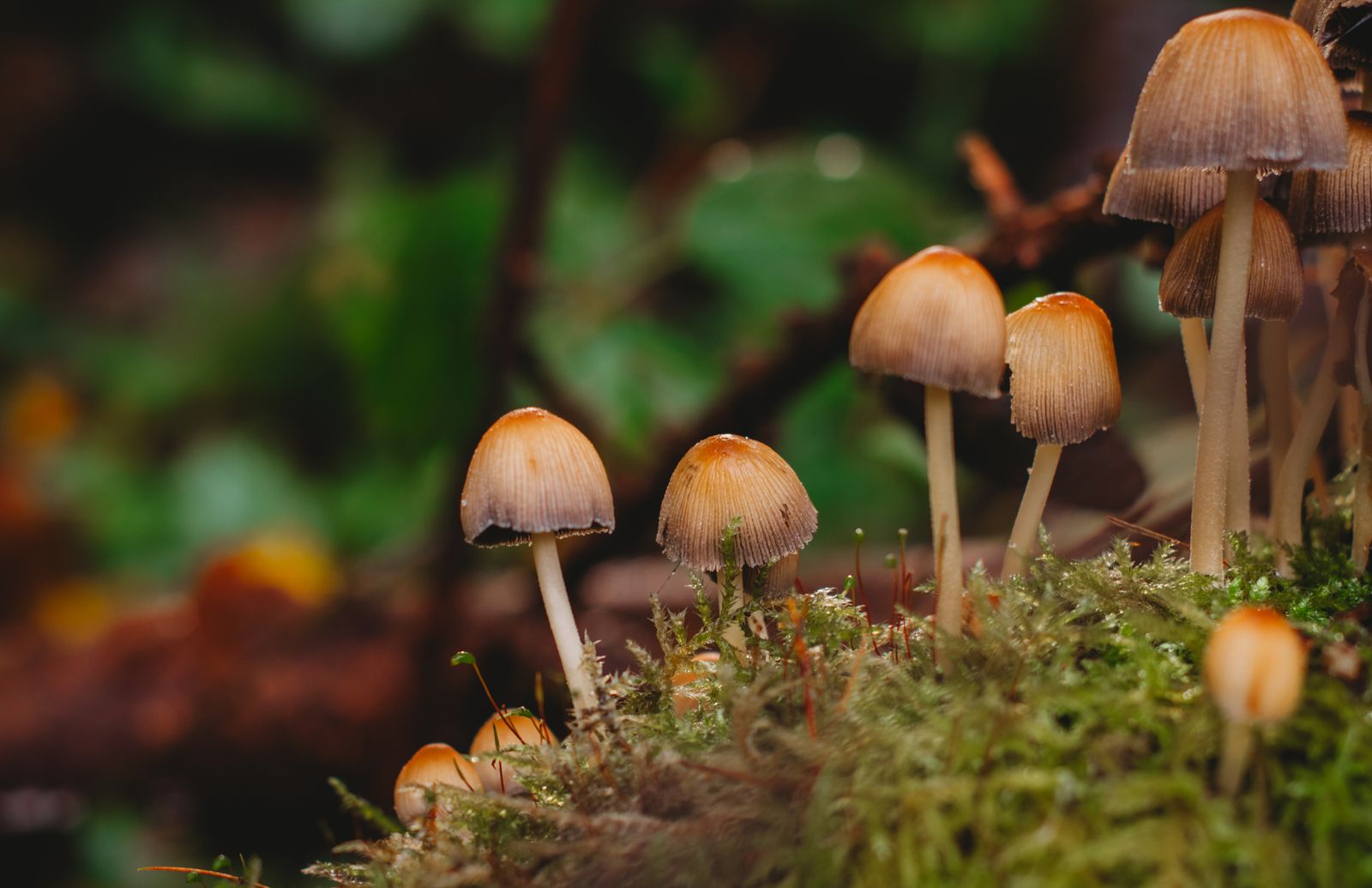
Nấm tràm (also called nấm ngọc cẩm) is a wild mushroom that grows exclusively beneath melaleuca trees — the tràm trees that cover much of Phú Quốc’s interior forest. The cap is small and rounded, usually pale purple or grey-brown, with white gills underneath. The flesh is dense and releases an earthy, forest-floor aroma when broken.
What makes it rare isn’t just the habitat. Nấm tràm cannot be cultivated. Attempts to grow it outside its natural forest environment have failed — the mushroom depends on a specific relationship with the tràm tree root system that hasn’t been replicated in controlled settings. Every mushroom on the plate was hand-picked in the forest, usually before dawn before the heat drives both foragers and mushrooms back underground. The flavour is distinctly bitter-earthy with a sweet aftertaste that most guests describe as more interesting than any mushroom they’ve tried before.
When nấm tràm season opens
There are two brief harvest windows each year, tied to the lunar calendar and the arrival of the rains:
- Lunar months 3–4 (roughly April–May): the first rains of the wet season trigger the first flush of growth in the forest.
- Lunar months 7–8 (roughly July–August): the second and usually more abundant harvest, when the forest floor has been wet long enough to sustain a full crop.
Each window lasts roughly two to three weeks. Local foragers head into the interior forests before sunrise, working quickly because the same cluster won’t yield again for months. During peak flush, the mushrooms appear in dense colonies around the base of tràm trees — a striking sight if you happen to encounter it. Outside these windows, fresh nấm tràm simply doesn’t exist in any form worth eating.
If you’re visiting Phú Quốc in July or August, you’re arriving at the right time. The rainy season on Phú Quốc brings its own rhythm and reasons to be here, and nấm tràm season is one of the better ones.
How to eat nấm tràm: what to order
Because the mushroom has a natural bitterness, the traditional preparation starts with a brief blanching in lightly salted water — this softens the sharpness and makes the sweet finish more pronounced. The mushrooms are then ready to cook in whatever direction the cook prefers.
The most common ways to find it served in Phú Quốc:
- Canh nấm tràm tôm (mushroom and shrimp broth): the most local version — a clear, light soup where the nấm tràm provides deep earthiness and fresh shrimp add a natural sweetness. A common lunch-spot special during harvest months in Dương Đông.
- Nấm tràm xào tỏi (stir-fried with garlic): a quick, dry stir-fry over high heat with garlic and a little fish sauce. The mushrooms hold their texture and absorb the seasoning cleanly.
- Súp nấm tràm trứng (mushroom egg-drop soup): thicker, starchy, and warming — sliced tràm mushrooms with beaten egg. More of a home-kitchen dish, but some small lunch spots serve it.
Look for handwritten daily specials on a chalkboard at smaller restaurants in Dương Đông — that’s usually the sign that the cook has fresh nấm tràm that day. Hotel restaurants and tourist-facing spots are less reliable for this kind of seasonal ingredient.
Buying nấm tràm at Dương Đông market
Dương Đông Market is the easiest place to find fresh nấm tràm during harvest season. Arrive before eight in the morning — mushroom vendors set up early and the best stock moves fast. Look for nấm tràm displayed in small rattan baskets or plastic bags alongside other foraged ingredients; the pale purple-grey caps are distinctive once you know what to look for.
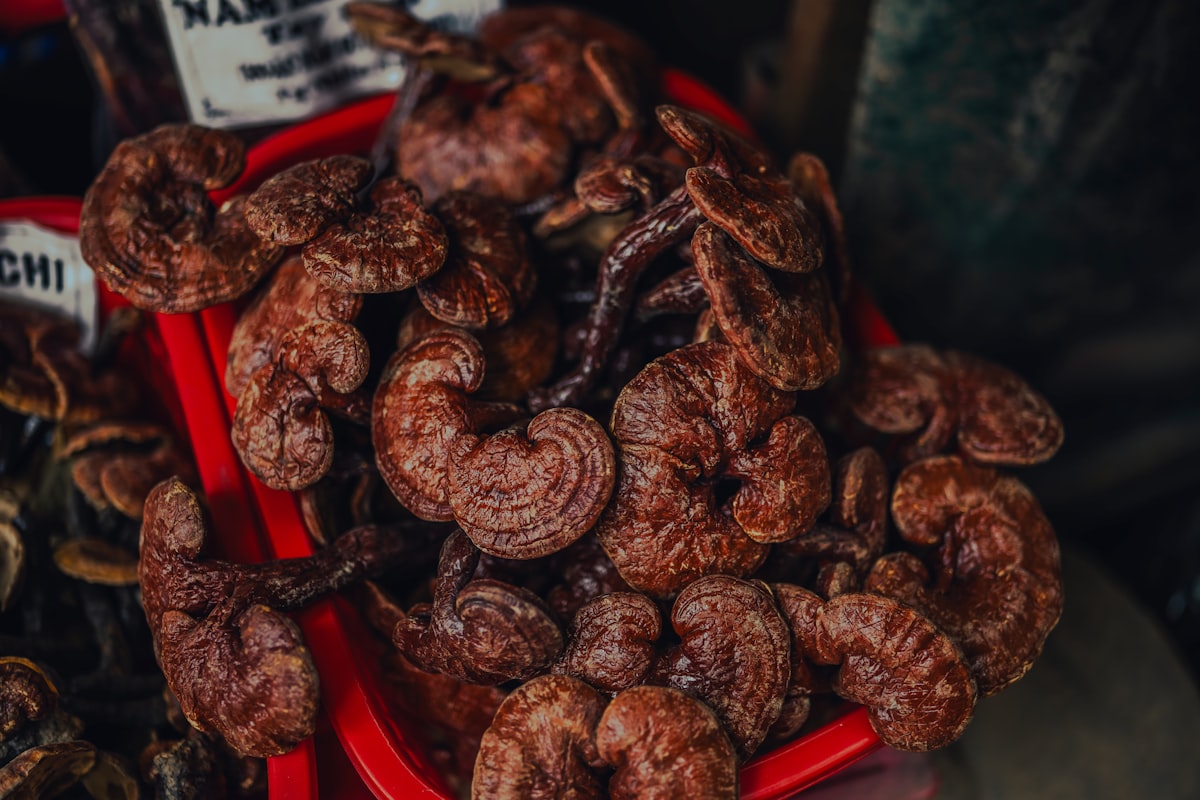
Fresh mushrooms at the morning market — nấm tràm is sold by weight, typically 150,000–200,000 ₫/kg.
Fresh mushroom price runs roughly 150,000–200,000 VND per kilogram. A kilogram is enough for a generous pot of canh (broth soup) — comfortably serves four. Buy small quantities unless you plan to cook the same day; the mushrooms don’t hold more than a day or two even refrigerated.
Dried nấm tràm is available year-round from specialty food shops in Dương Đông and at An Thới. Drying changes the texture but concentrates the flavour, and the dried version survives a flight home without trouble. It’s a different kind of Phú Quốc souvenir than the usual nước mắm bottle — and one that most visitors have never heard of.
The Phú Quốc Night Market also carries fresh nấm tràm during season, which is more convenient if you prefer an evening market run. Luna Oriental is at SS27 Sonasea, Bãi Trường — Dương Đông Market is about 12 km north, a 20-minute scooter ride. Ask at reception and we’ll point you to the right stall.
Nấm tràm doesn’t appear on most lists of things to do or eat in Phú Quốc. It doesn’t photograph dramatically, it isn’t sold in airports, and outside of six weeks a year it doesn’t exist in fresh form. That’s exactly what makes finding a bowl of canh nấm tràm at a local lunch spot — when you happen to be on the island at the right time — one of the more quietly lucky moments a trip here can deliver.
Photos: hero — Lana Kravchenko on Pexels; in-body — Leandra Rieger on Unsplash.
Frequently asked questions
What does nấm tràm taste like?
Earthy and mildly bitter with a pleasant sweetness in the finish — more complex than any farmed mushroom. The texture is firm and holds up well in broths and stir-fries. Most people who try it say it's the best mushroom they've eaten.
When is nấm tràm season in Phú Quốc?
There are two harvest windows each year: the third and fourth lunar months (roughly April–May) and the seventh and eighth lunar months (roughly July–August). July is usually the more abundant harvest. Outside these windows, fresh nấm tràm simply doesn't exist.
Where can I buy nấm tràm in Phú Quốc?
Dương Đông Market is the easiest option during harvest season — arrive before 8 am for the best selection. The Phú Quốc Night Market also carries it when in season. Dried nấm tràm is sold year-round at specialty food shops in Dương Đông and is the form that travels well.